

SA 33: Chicama Surf
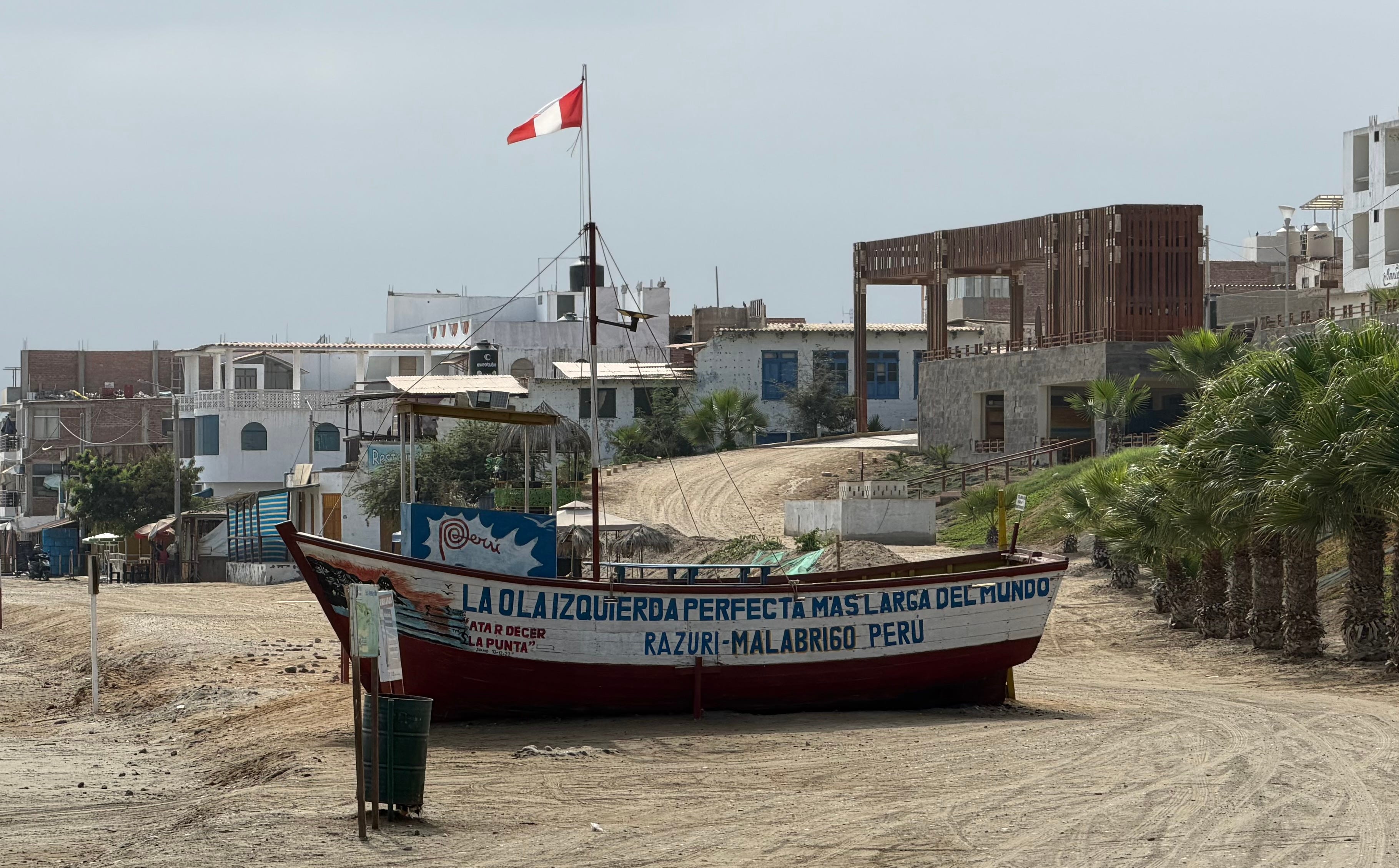
I surf the world’s longest perfect left-breaking wave.

Introduction
Welcome to 1000 Miles South America. My goal is to run 1000 miles on every continent and I started my fourth on May 22, 2026. I finished running from volcano to volcano in Ecuador, climbing and skiing each one, on June 11, 2026. Now I’m heading to the Cordillera Blanca in Peru. Follow this blog or my Instagram for updates.
Surf Report
Summary: I surf the world’s longest perfect left-breaking wave.
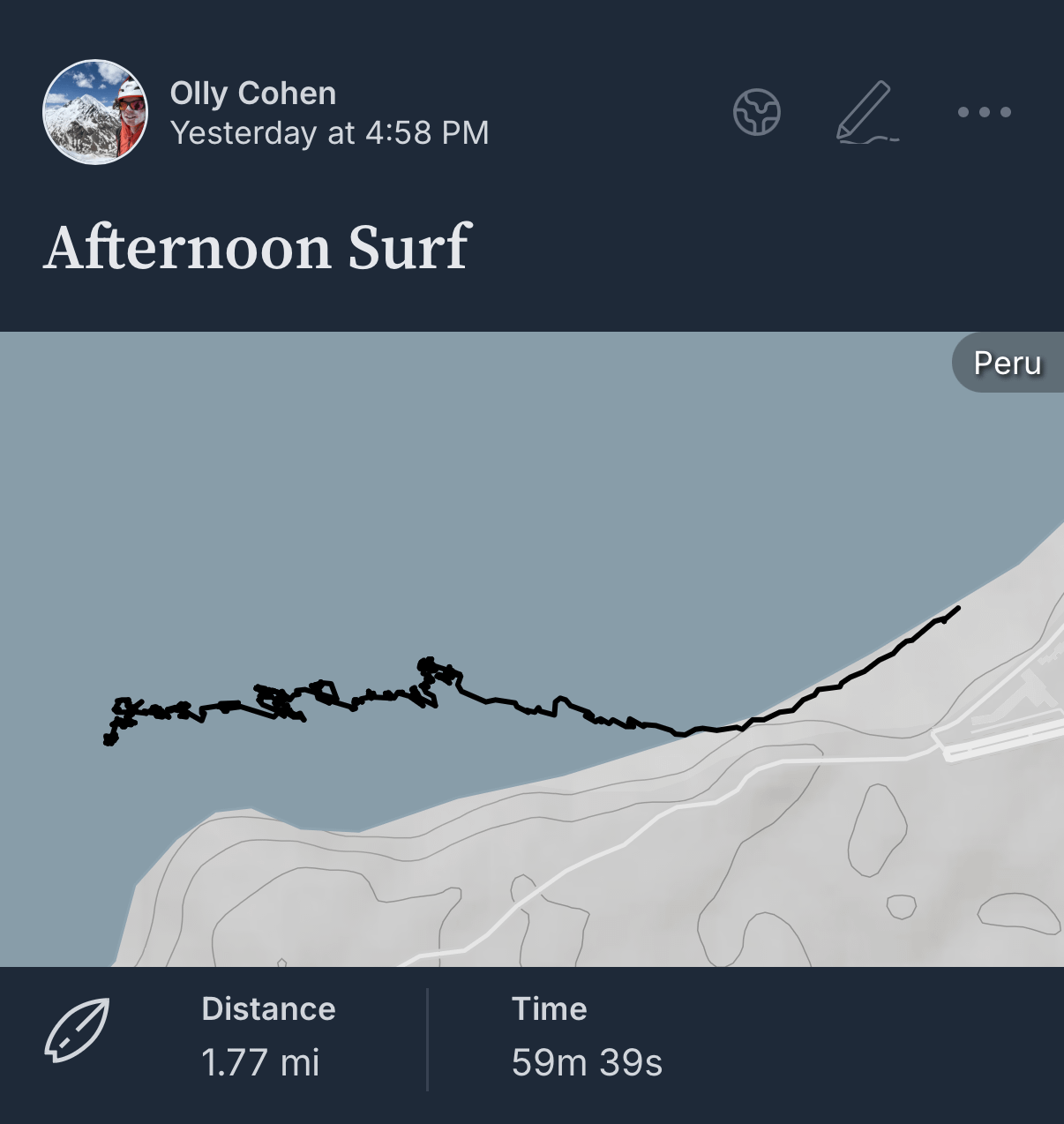
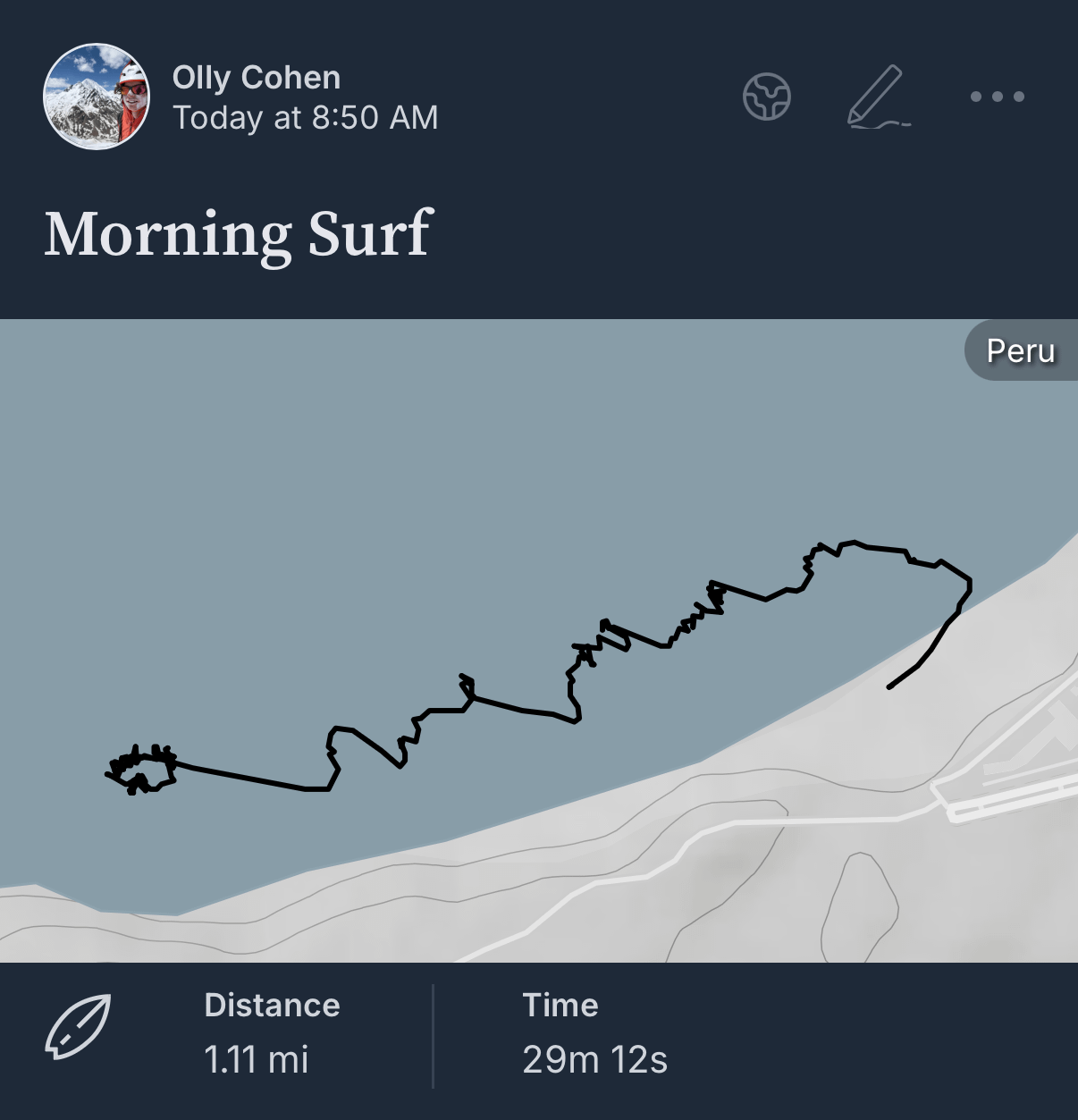
Sara, Gian, and I discuss our driving plans. Chicama is enough of a detour off the main highway that stopping there would add a day of driving to the road trip. I don’t want to delay our arrival in the Cordillera Blanca and decide to offer to skip it, but something makes me bite my tongue.
Though I’m not the world’s most dedicated surfer, it feels against my integrity to pass the opportunity to surf Chicama.
Then, Sara says, “I propose we go to Chicama, camp there tonight, and then drive a long day tomorrow to get closer to the mountains.”
Woohoo! Sara and Gian won’t surf, but they point out that Chicama has better camping options than the towns further down the road, so off we go.
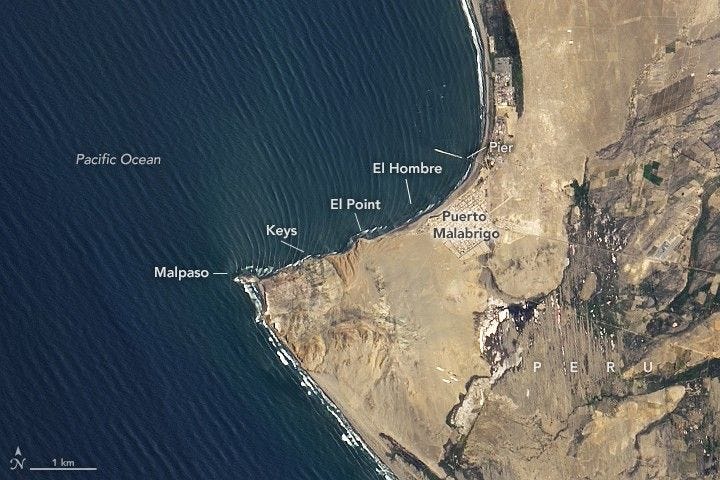
Image Source: NASA Earth Observatory

I must have first heard about Chicama on my gap year 10 years ago when I came to Peru. I hadn’t yet learned to surf and had no idea I’d be goofy-footed, but something compelled me to star the place in my Google Maps. Ever since then, the world’s longest wave has stuck in my mind.
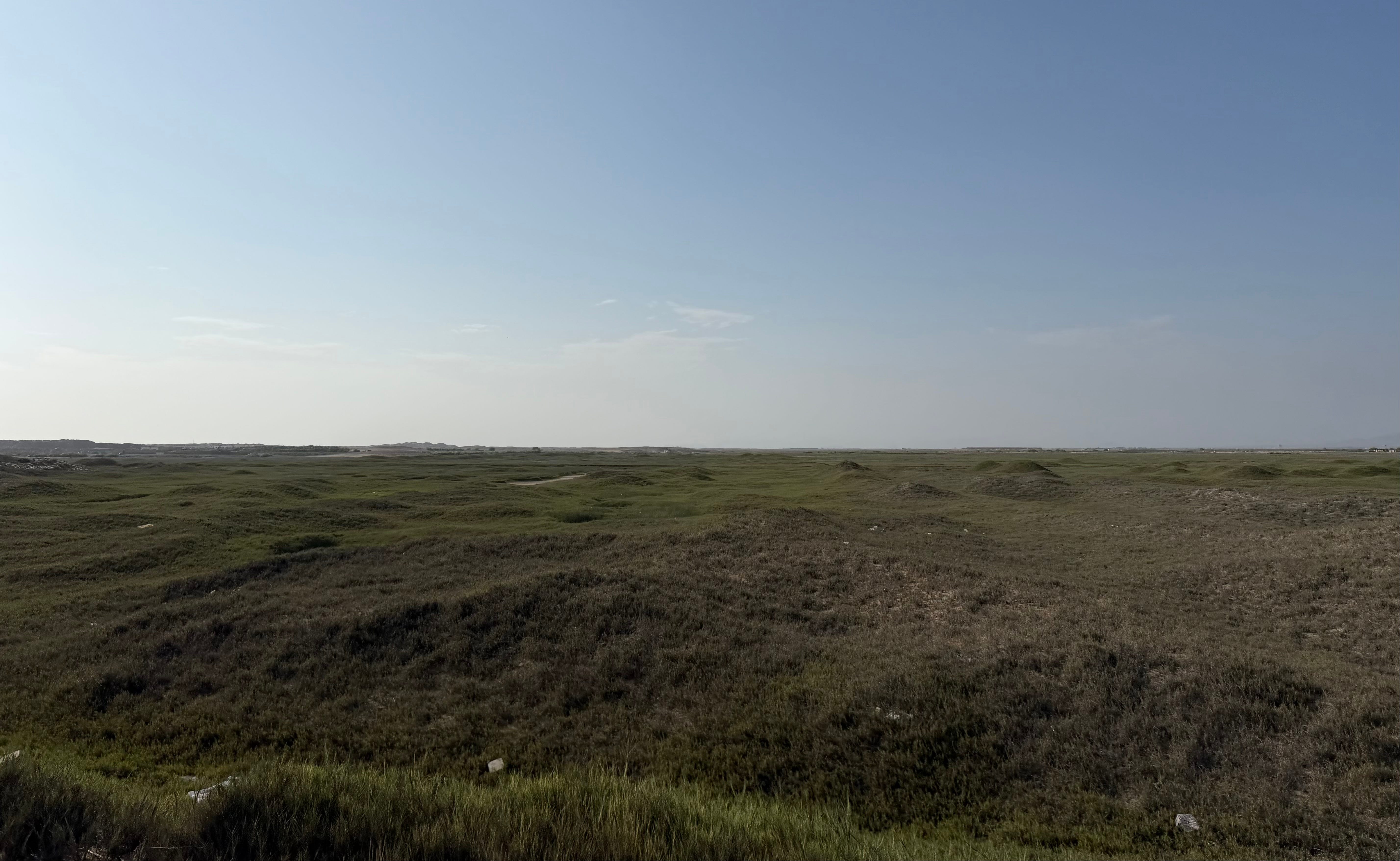
Vast expanses of nothing extend in all directions on the north coast Peru making any civilization an oasis.
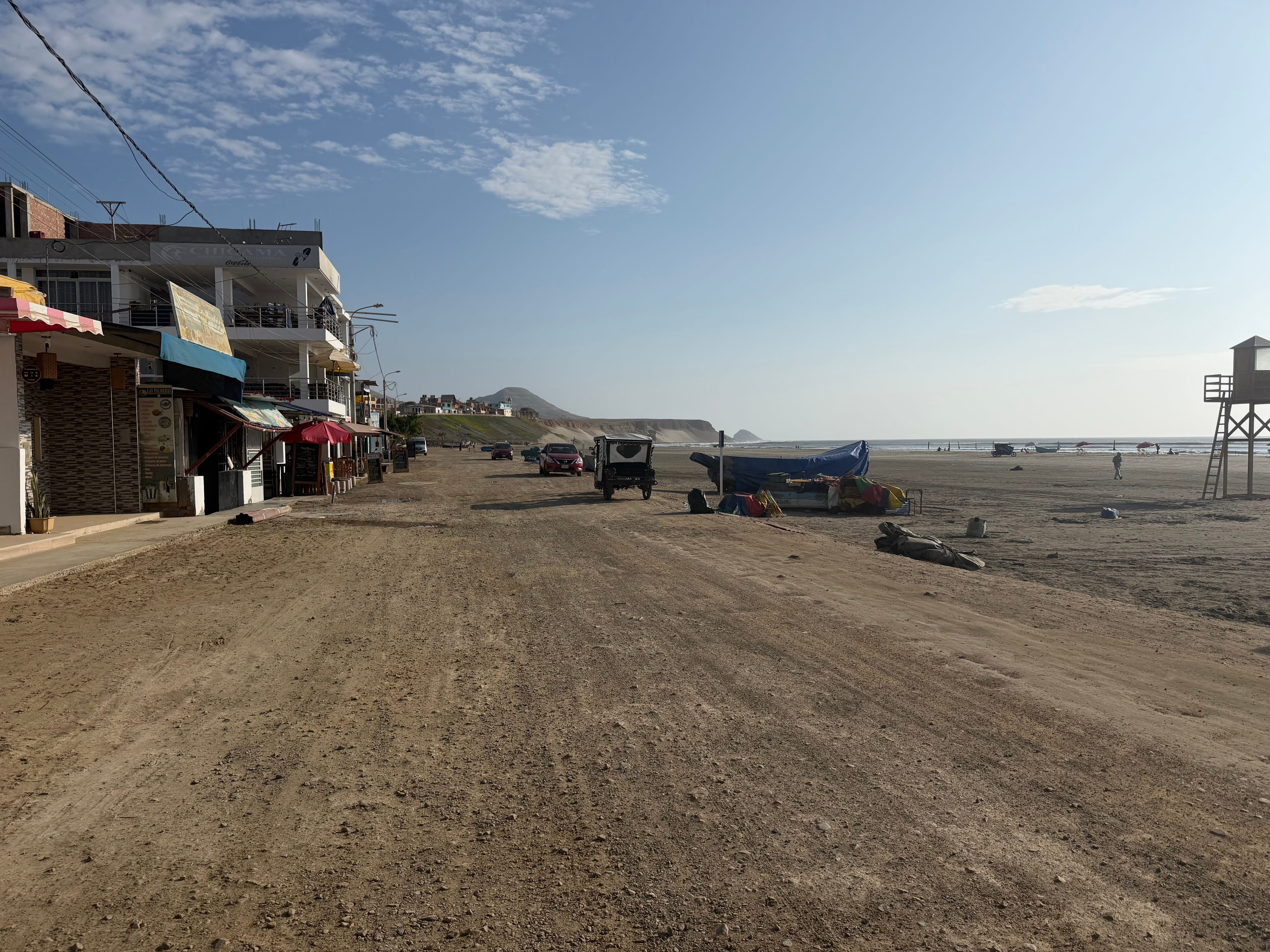
We arrive in Puerto Malabrigo at 4pm and learn that the late afternoon is the best time of the day. Time to surf! I walk up to the first guy I see on the beach and say “Quiero surfear” (I want to surf). He starts making calls and knocking on doors. No one’s home, so he tells me to walk to the other side of town.
I run to the shops on the other side. The first shop rented all their boards. At the next one, I meet Jesùs. He hands me a fat 6’1” board with “good flotation”. Perfect!
The town of Puerto Malabrigo where Chicama’s wave breaks is built on Sandy peninsula near the westernmost point in South America. Jesús has been here his whole life. 40 years ago there was nothing. They didn’t even have lights.
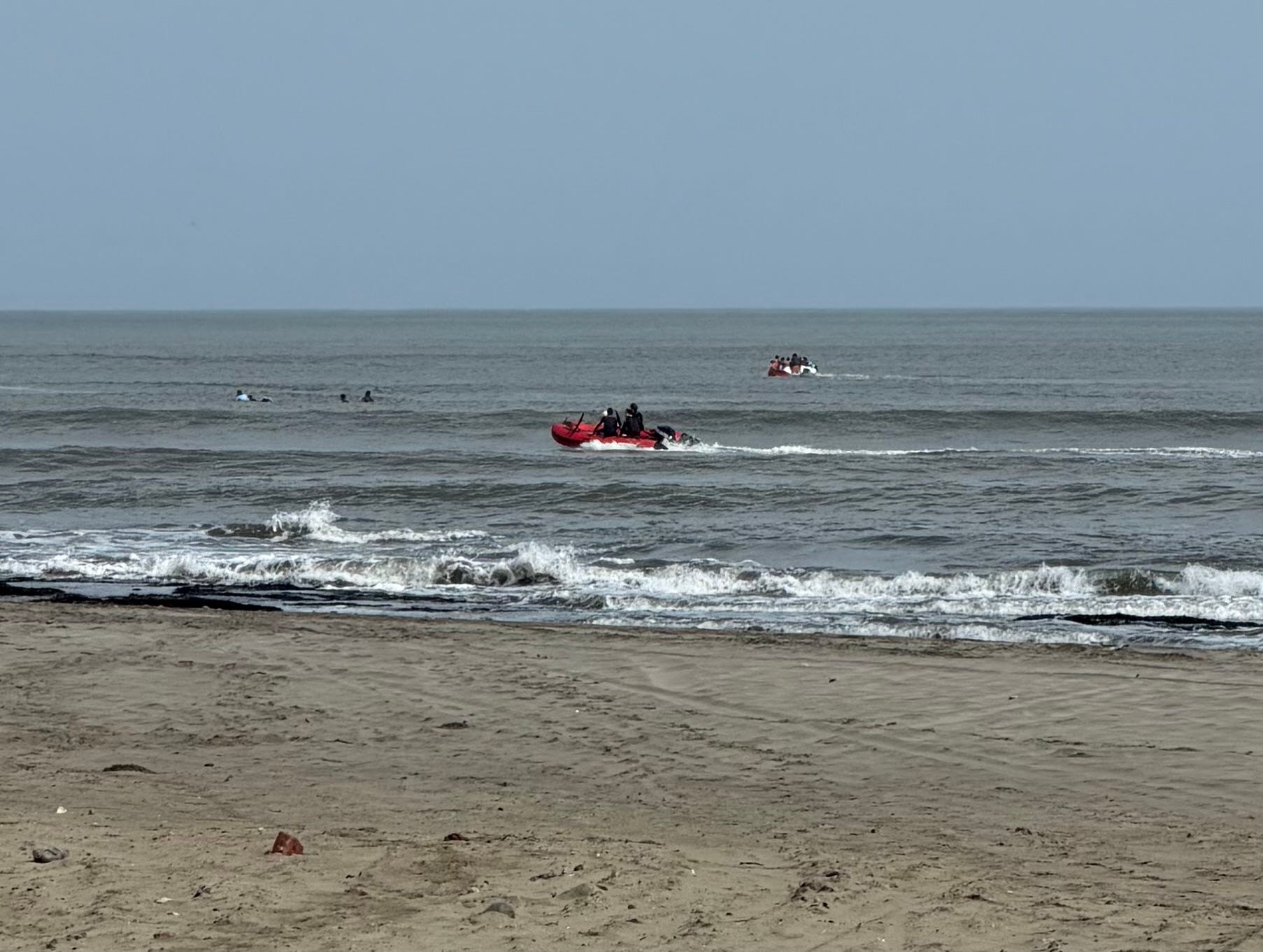
Now Chicama is a full production. ATVs taxi folks along the beach, and motorboats carry people from the shore to the wave where drones fly overhead filming everything.
I ask how the wave is. He says good. I ask, Small? Yes but they’re good, you’ll have a good time! Thanks! With Jesús’s blessing, I run to the water.
when I get to the beach I see two guys pushing a motorboat into the water. I ask how to get to the wave. They ask, first time? I say yes. They tell me to get in the boat. I ask how much. They wave their hands. No money, just get in. Okay 🫡
The man is a Brazilian hydro foil boarder and tells me he’s traveled around the world for foil, but this is the best. Wow.
They bring me to the point break, identified by a cluster of black rocks sticking out of the water, and tell me to jump out. “Paddle toward the rock. You’ll be fine, you won’t hit it.” As I jump in, a wave comes, and they yell at me to paddle. I paddle for my life but don’t catch it. When I look back they’re gone, and 45 minutes after arriving in Puerto Malabrigo, I’m on my own sitting in the sweet spot of the world’s longest left break.
The wave is small for locals but looks big to me. I do my best to catch it while also getting used to a board I’ve never surfed, gaining respect for the strong current of the water, and making sense of the crowds of people, surf lessons, drone cameras above, and motorboats and jet skis constantly whizzing by. After an hour, I’m shivering from the cold and unsuccessful surfing the wave.
Over the course of the next 24 hours, I fill in the gaps in my knowledge. I go for a run when I wake up and meet 4 teenagers packed into a van on a bluff overlooking the wave flying drones to film the surfers. “Bueno viento, sì?” (Good wind, right?) I ask. Sì, claro! they respond. I later learn that this beach enjoys near-constant off-shore winds.
I return to the wave for revenge with a newly rented wetsuit, determined to paddle out myself this time. I walk out to the point and fight through the strong current until I’m sitting right in the firing zone. I paddle for the first wave that comes and dang, fall off the board.
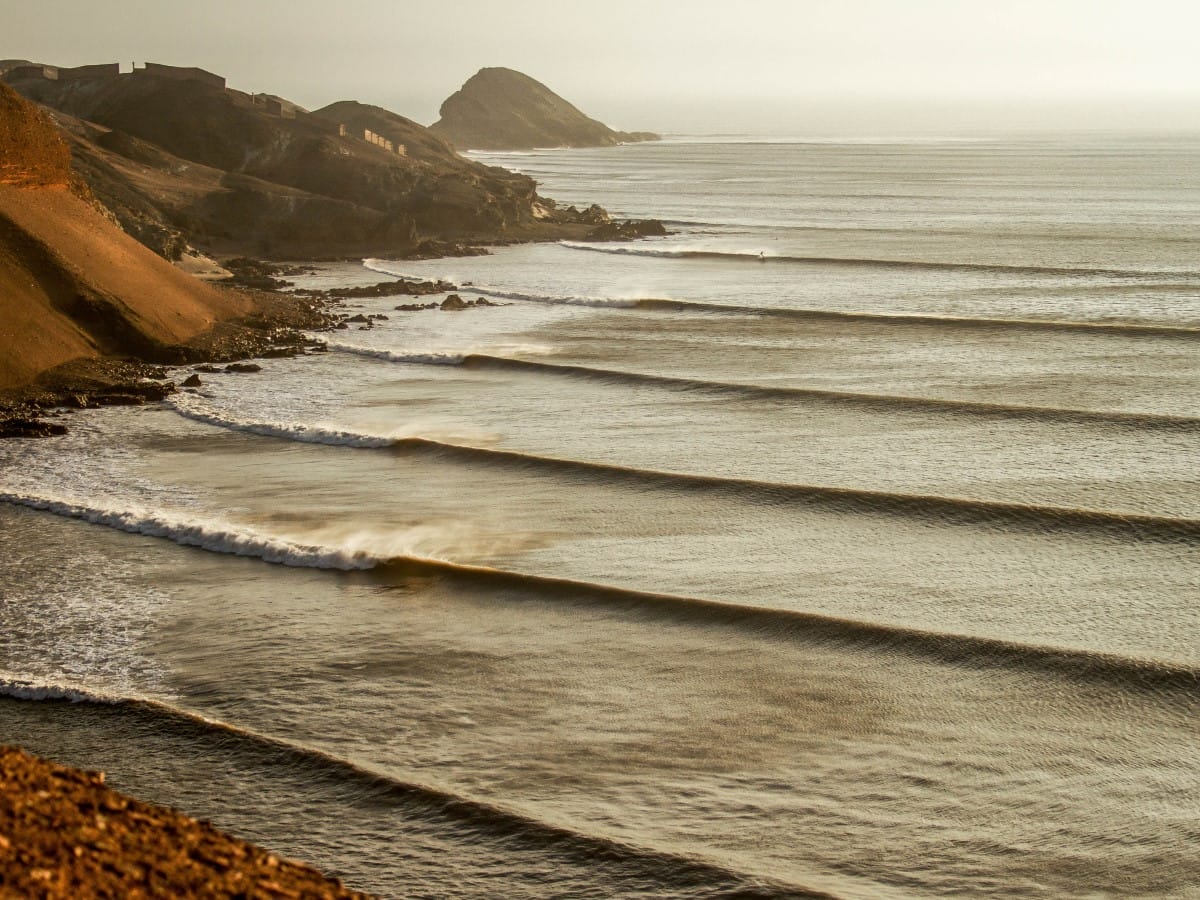
Image Source: The Surf Atlas
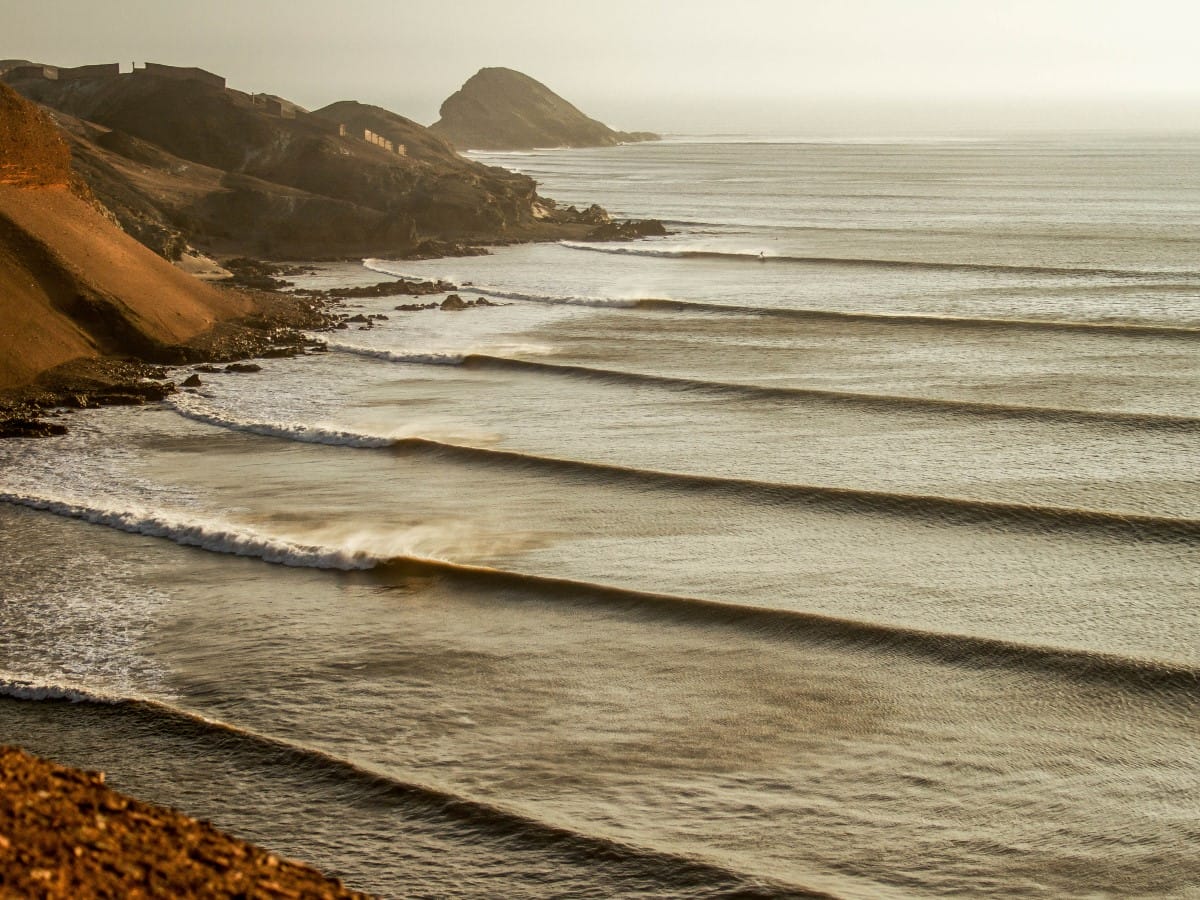
Again, and next time I catch it! I’m riding the wave and carving in and out for what feels like an eternity. The wave breaks and then seems to un-break, and then breaks again, as if the wind is saying, No that was too early, go back and break again. After a succession of waves, I’m back at the shore and begin to walk back to the point when I see the time. !
When I return my board, Jesùs tells me he learned to surf by watching the Americans and Australians who visited the wave 40 years ago. He was one of the first three locals who learned to surf here. 15 years ago, higher paying tourists arrived, and the motorboats, jet skis, and ATVs entered the picture. 9 years ago Jesús started filming the surfers on drone. Now all the teenagers I met filming on my morning run work for him. The best surfers I met in the water were also local youth on short boards.
In 1965, a Hawaiian surfer named Chuck Shipman first spotted the wave from his airplane window. After that point, it took some time for Peruvian surfers on the ground to actually reach the wave on unmarked roads through endless sugar fields. In 2016, Chicama became the first wave in the world legally protected, prohibiting any action that alters the waves shape within a 1.5km radius.
As amazing Chicama is really good for surfing, it’s even better for hydrofoil. In 3 years Jesús points to his surfboards, “All these will be gone. We will only rent hydro foils.” On July 21, in just over two weeks, the World Cup of hydro foil will be held at Chicama.