

Kwasunga
Day 3

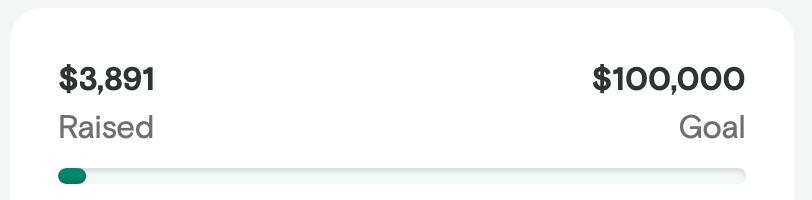
Run to Children’s Hospital Fundraiser (click me)
Route:
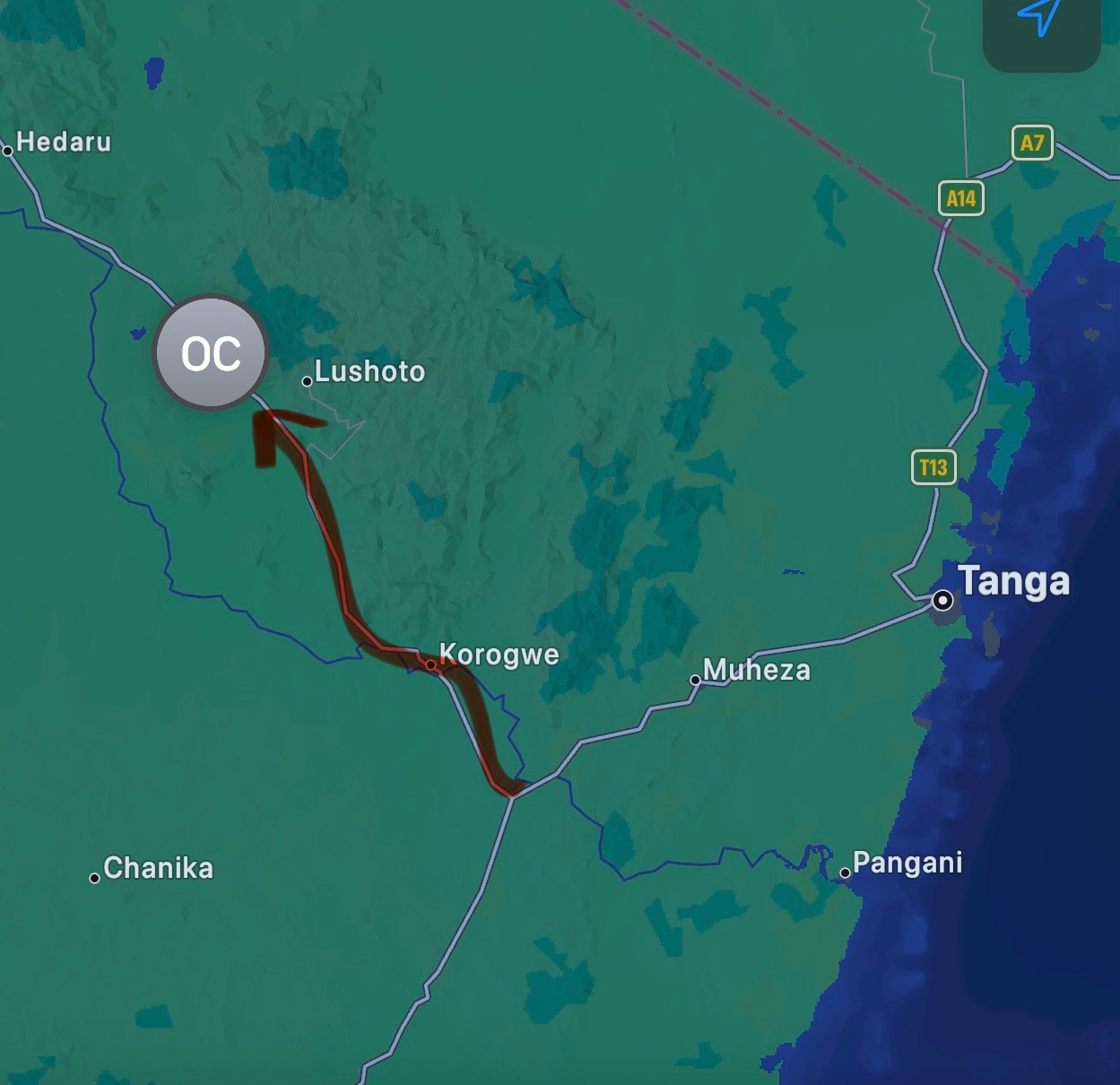
~21.2 miles today!
Kwasunga
Today I woke up at 5:30 in the small village of Changimbe. Masoud followed suit and stared at me while I packed. With his truly ultralight setup, he had nothing to pack in the morning. (He borrowed a mat from the village and used my sleeping bag.)
I considered saying something like, “stop staring at me,” and then decided to let it go. That was the best decision I made all day. For the rest of the day, I didn’t worry about Masoud. When we started running at 6:30, I just ran. I didn’t worry about pacing myself or keeping it slow for Masoud.
Toby Tanser (founder of Shoe 4 Africa Hospital) has written about the importance of running at your natural pace. Trying to match someone else’s speed and cadence can cause injuries. With that in mind, I found myself way ahead of Masoud pretty soon. When I went to sleep the night before, I’d been worried about injuring him by dragging him along on this journey. But as I left him in the dust, it occurred to me that it’d only cost him a dollar to take a taxi to today’s destination. Shoot I should’ve given him some money. (Just confirmed with him next to me: when he says “I have no money,” he literally has none.)
After some period of time, I saw a man hop out of a truck and start running in front of me. It was Masoud! He hitched a ride. Very resourceful. Soon I caught him and gave him some money for the taxi. Maybe a Masai can do an Off the Bench (African version of Off the Couch) marathon but I guess not an off the bench marathon of marathons.
Masoud continued leapfrogging me again and again. He would catch up and then I’d run past. When we got to the halfway point, I told him, “Rule number one: stay healthy. Rule number two: stay healthy. Rule number three: stay healthy.” He laughed. He didn’t need to hear that. One thing I’m learning about poverty is that it makes you very risk averse. It reminds me of doing a solo backcountry trip where you might not be able to get out of trouble if you get into it. Masoud was waiting at today’s destination Kwasunga when I got there. I’m very happy he figured out his own system for staying with me— allowed me to focus on my run.
I had one of those miracle runs today where the whole day flowed smoothly. All morning, the road climbed until we were high enough by 10am that it stayed cool.
If you’re wondering how Tanzania roadside snacks are for marathons: world class. You thought GU’s were good energy? How about organic homegrown sugar cane: pure straight fresh sugar. Roadside coconut water from a coconut chopped in front of you? Yep no problem. Dates? Yes! Fresh oranges? Absolutely. Hard-boiled eggs? Yarrr. And then there’s homemade junk food: fried dough in particular. I’m shocked at how healthy I’m eating here— leagues better than in Canada.
One problem I had yesterday in the village was that Masoud became more of an inductor than a conductor to my interactions with the local people. I got stressed with him waiting on me for instructions and then me waiting for him to translate back. During my run, I realized I want an interpreter, not a translator. I imagined a great interpreter as sinking to the background so as to allow someone to feel like they’re interacting directly with a foreign person. When we arrived today, I went straight up to the villagers and smiled and greeted them. I then asked for the chairman. Masoud following close behind added to my extremely limited Swahili. He fell into the role of interpreter perfectly without me having to say anything.
I also had the thought while running that people in these villages might think Masoud is pretty smart if he’s traveling as interpreter with this American adventurer. What better networking opportunity exists than to go from village to village meeting with the chairman (mayor) of each one? I told him that, and he replied a respectful form of, “Duh!” That’s why he accepted this job.
Today, the chairman of Kwasunga, Lucas Frank (not sure what his Swahili name is), really got excited about our mission. He introduced us to our hosts with a sparkle in his eyes. I asked the him (through Masoud) about the current state of affairs in the village. The people here live as family, communally. They work the fields together. A few engage in small business. If someone is in need, the community comes together to help.
If this sounds reminiscent of a knight’s tale or white man’s burden, it’s all of that. I can’t help thinking of a pompous knight in Monty Python arriving in a new land and having his squire read a scroll for all the villagers to see (Masoud reading my laminated card). And growing up, I learned about white man’s burden as the fallacy that Europeans/Americans think they can save people in the third world. What we didn’t learn is that African’s believe in white man’s burden too. First of all, my name is “mzungu” (white man) here. Even Masoud calls me that. Secondly, anyone with a smartphone (Masoud doesn’t fall into this this strata), wants my WhatsApp and will invariably tell me they want to come to the United States. People have asked me to build a hospital, get scholarships for their children, and help them come to the United States. On one hand, this is why I came to Africa. I actually do have the capacity to help some people with some things and I’m glad people are so open about their problems. The Shoe 4 Africa hospital was born out of a conversation with local Africans. On the other hand, I have no patience for people who just want money or think they need to go to America.
70% of Tanzanians are Christian and 30% are Muslim, but I think the real religion here is soccer. At least it’s becoming mine. Three of the last four nights I’ve gone to play soccer in the village I’m staying. Huge crowds show up for the games. Without fail, the villages ask me to put on some sort of demonstration of my skills by juggling with their best players. I was very reluctant to interrupt kid’s soccer practice to show off my mediocre juggling skills. Nonetheless, Masoud convinced me that it would please them because they are asking me to do it. Today I went to soccer practice in the evening on a beautiful field with a view of rolling farm fields and mountains in the distance. It reminded me of the fields at my high school Millbrook.
I did some juggling with the players and then joined the warm up. What a treat to run laps and stretch with the team. Not only did soccer help me transcend the language barrier and connect with the locals, but I got a recovery workout too. That connection with the locals makes me feel safe in the village and the locals feel safe around me. It’s my passport here— the ticket to acceptance. One of the principles I set out for this adventure was to heal. I wanted to feel healthy enough after each run to dance with the locals. Canada run ski Olly would be proud of the multi-sport theme.
Masoud and I got dinner in the village center. My current go-to: rice and beans. The owner of the restaurant wanted to give me her daughter. I realized that we actually do use that language a bit in the US because the father “gives away” the daughter at the wedding I think. Suffice it to say I’m no longer alarmed when people try to give me women.
This adventure is truly out of distribution.
"Splattern: Distributing the out-of-distribution"