

Awaken The Hunter
A five day hunting course in Eastern Washington

In December, I walked by a man at the Ballard Farmer’s Market with Robert Redford’s looks standing tall dressed head to toe in wool: wool pants with suspenders and a wool button-down shirt.
Bruce McGlenn operated the only stand at the market with nothing for sale. He had come to promote the Human Nature Hunting School, which seeks to “Heal and strengthen the bonds between humans and nature to the point we realize we are nature.” I told Bruce that I no longer buy meat but still crave it.
Bruce also no longer buys meat I learned. He lives with his family in a log cabin on an acreage in eastern Washington where they source much of their food from hunting and a big garden. I mentioned I’d be driving through in a few weeks to go to Montana for work. We exchanged contact info and managed to stay in touch.
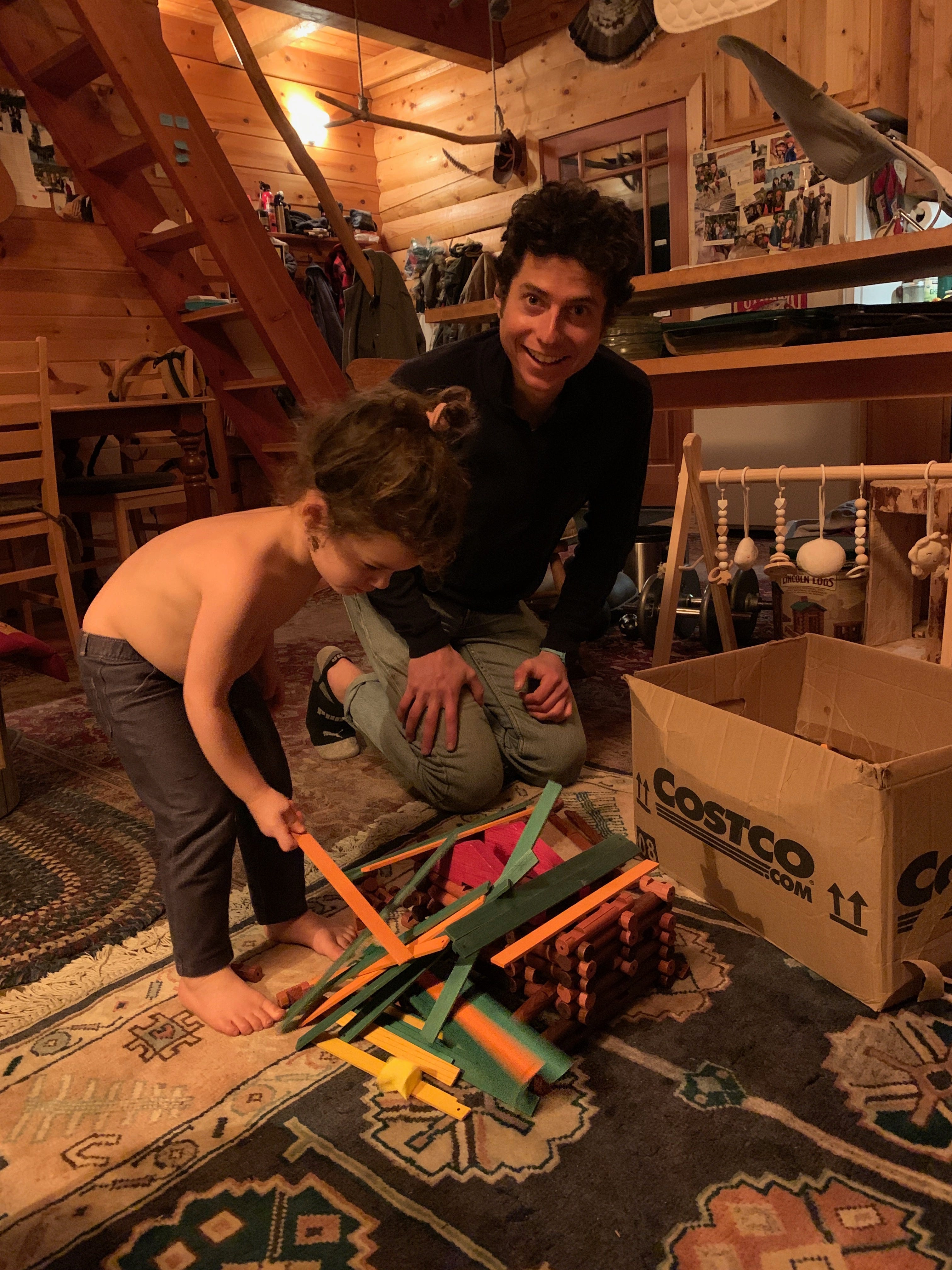
A few weeks later, I pulled up to Bruce’s land on a cold night and met his family: his wife Sarah, two year old daughter Maya, and baby girl Hazel. They cooked elk stew for dinner, which we ate with fresh-baked bread. Maya had no screens to play with, just wooden toys and me. She directed a Lincoln log construction project with inextinguishable energy. When Maya was in utero, Bruce and Sarah shot an elk in the snow at dusk and hauled it out of a canyon to their backcountry camp.
When Sarah first met Bruce, she was a vegetarian and practiced a branch of Buddhism that abstains from harm to all living beings. How she came to marry a hunter piqued my curiosity.
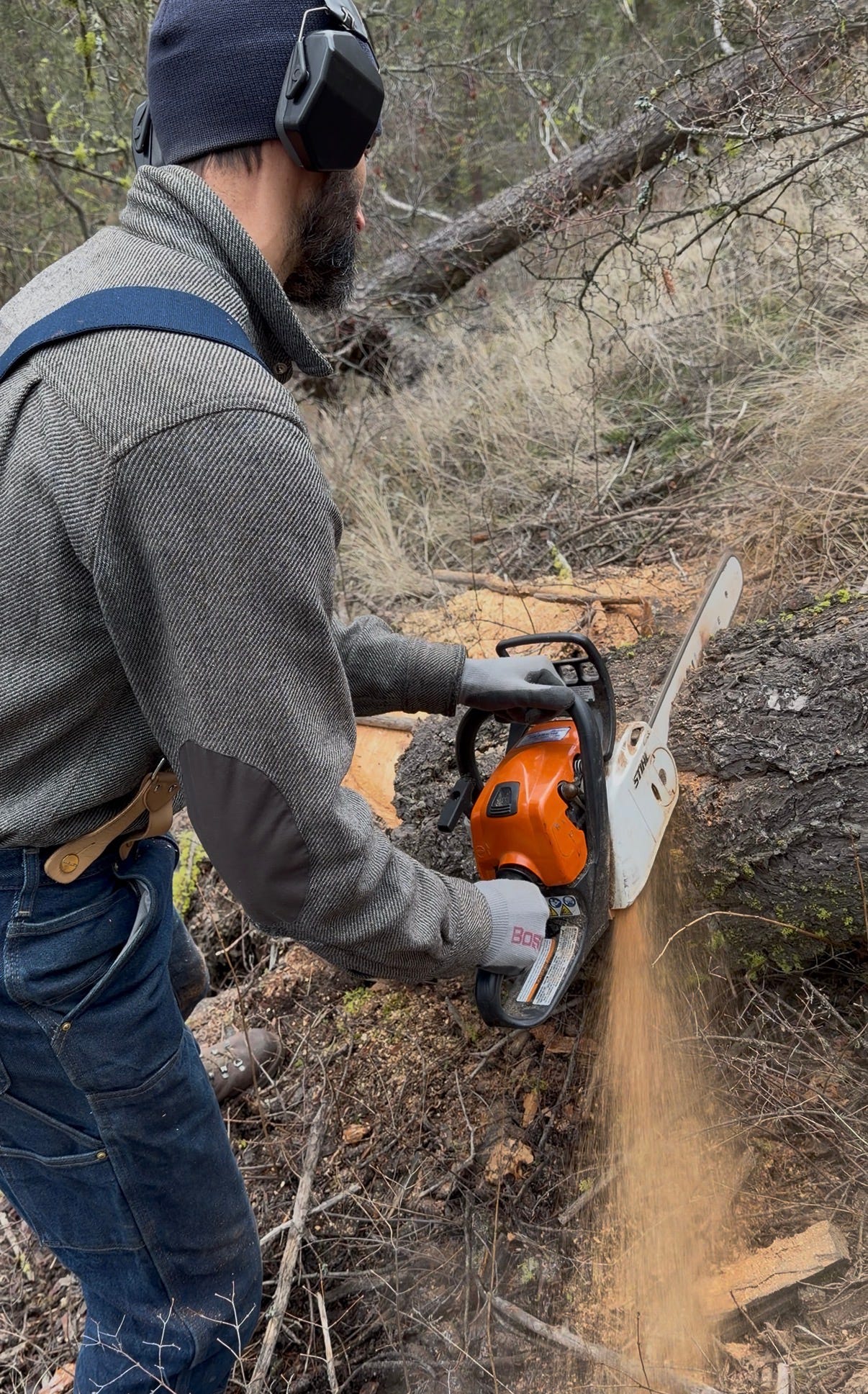
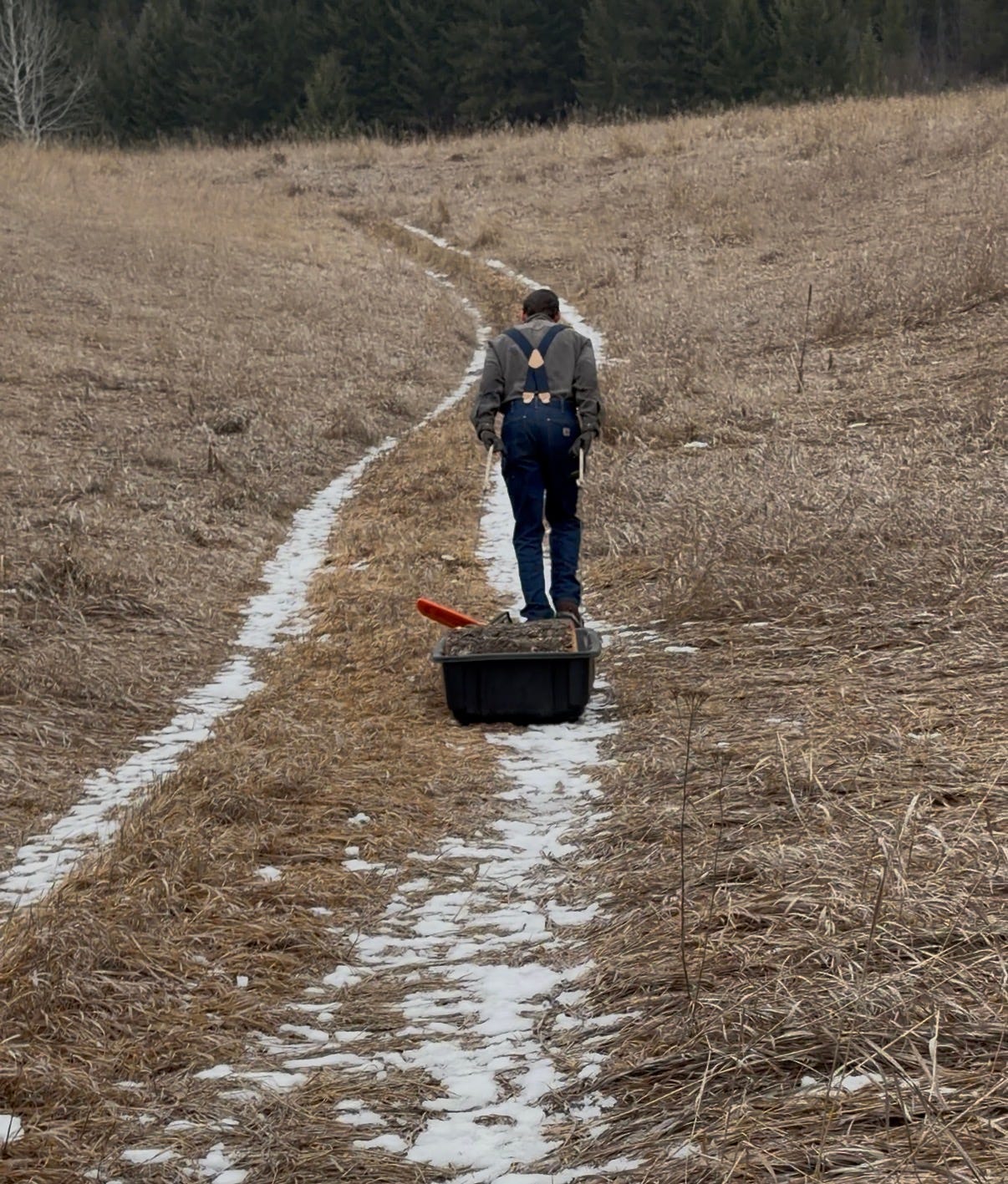
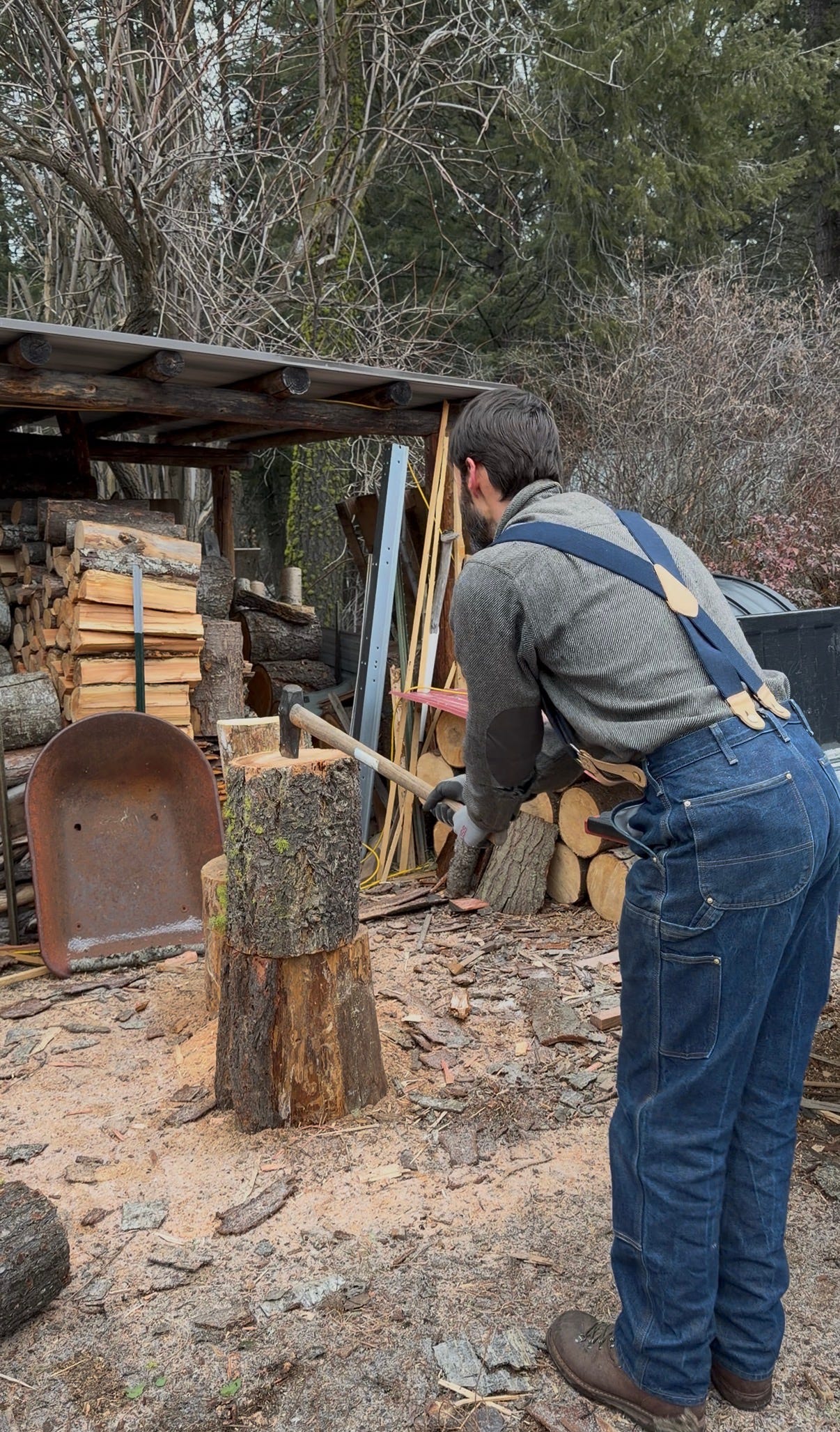
In the morning, Bruce and I gathered the kind of firewood that heats three times: once when you cut it down, once when you haul it home, and again when you put it in the fireplace. Given the choice to take a nap or walk with us, Maya braved the cold. Apparently, she always chooses to walk.
When the time came to leave, I didn’t want to and Bruce and Sarah asked if I would return for a hunting course. I said yes. Fast forward four months, and I arrived at the same land now plush with green grass, birds tweeting, and budding flowers. I had been granted a scholarship to attend a five day “Awaken The Hunter” course.
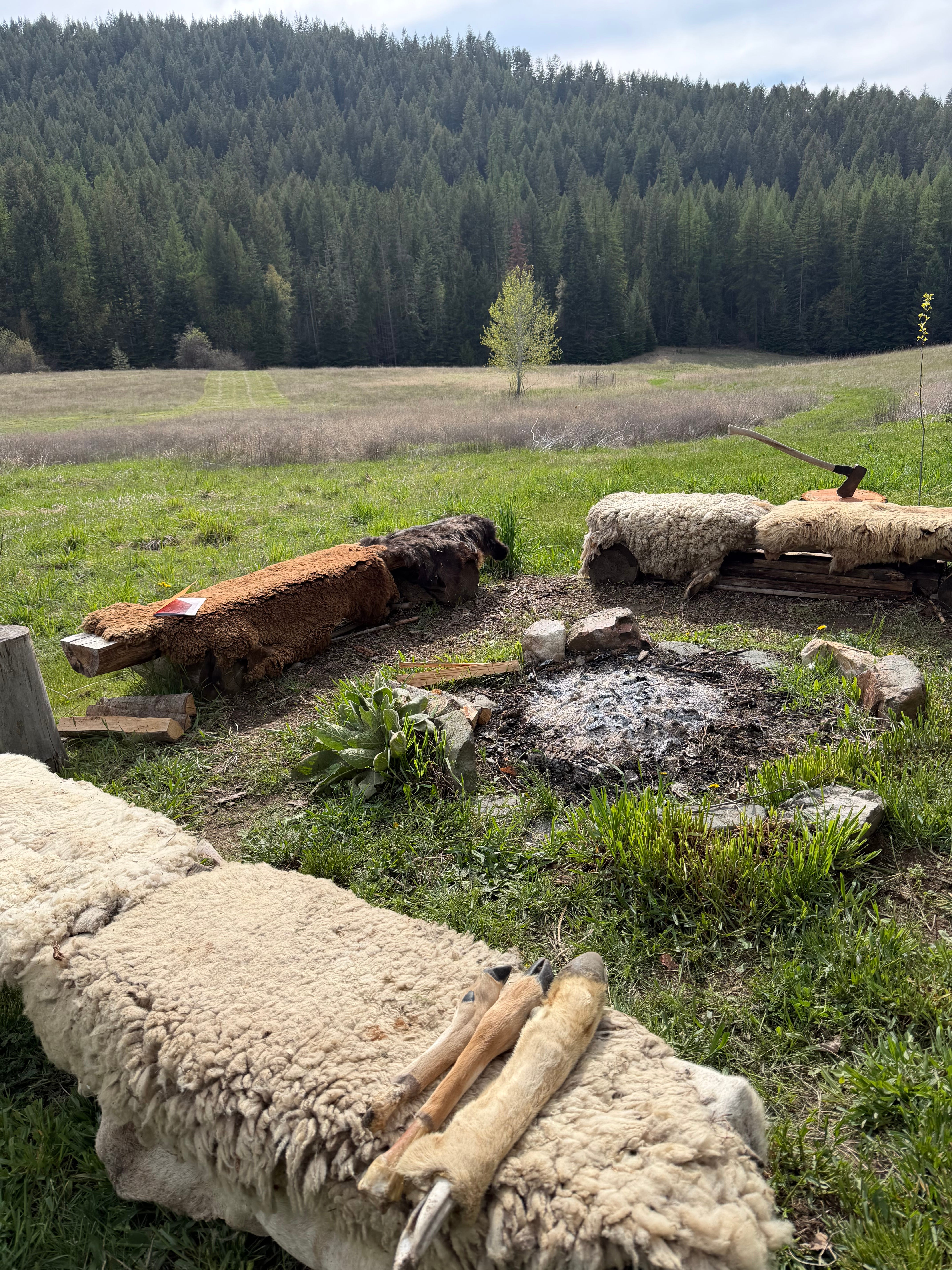
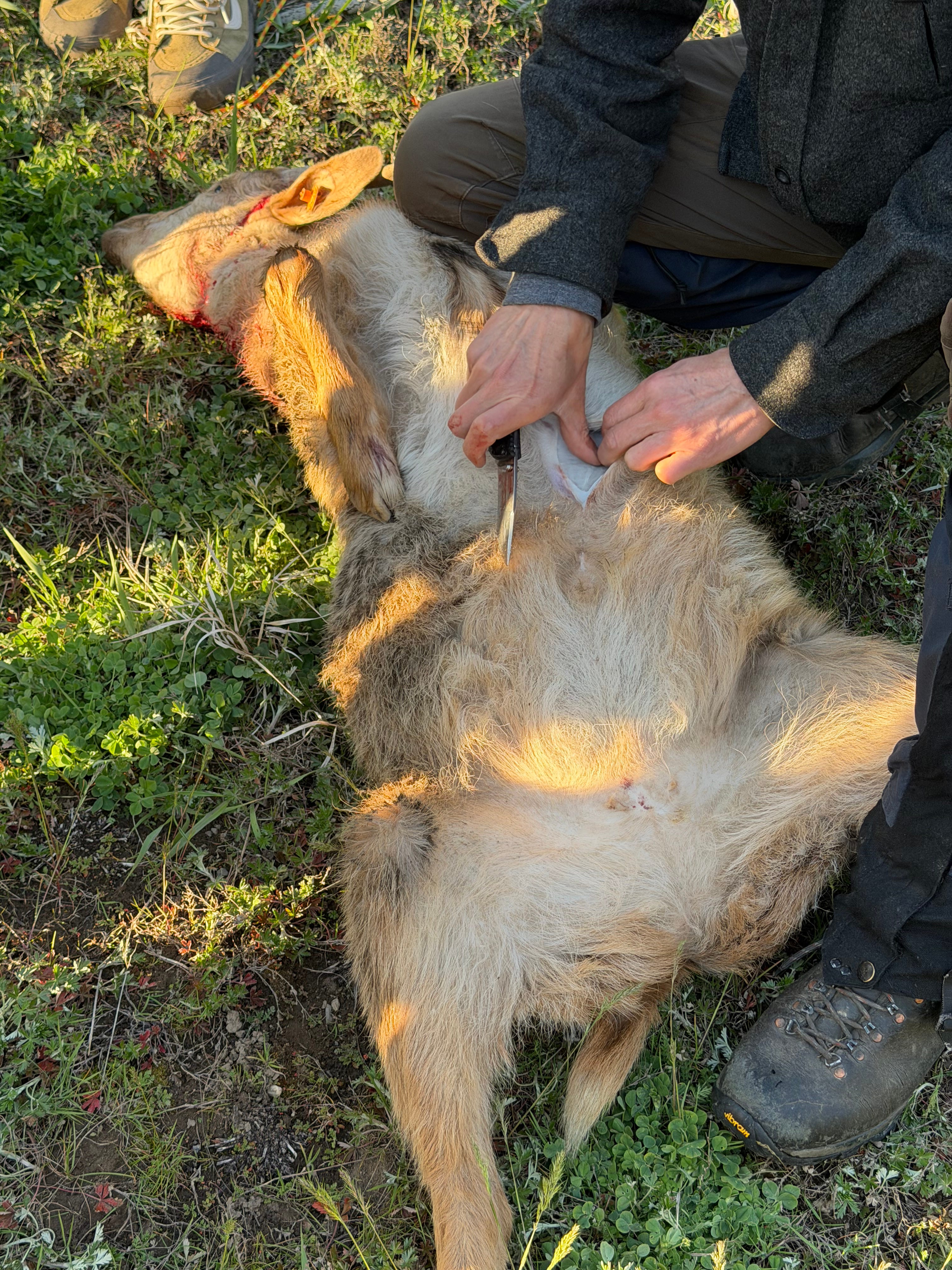
Soon after I showed up, Bruce shot one of his goats for us to eat over the next four days. Fire rushed through me. I felt like crying and wished I’d done something to stop the killing. I couldn’t believe Bruce would kill an animal just to feed our class, and watching it happen made me feel powerless. Immediately after the shot, Bruce ran up and cut the goat’s throat. The blood drained fast and legs stopped kicking after about 10 seconds.
Bruce closed his eyes and placed his hand on the goat’s chest. He connected with the animal and took a moment of gratitude for the food it would provide. I still wished I spoke up and promised to eat veggies. I didn’t see why it was necessary for us to kill this happy animal, and I didn’t understand why no one else seemed as upset as I felt. I hid my emotions, fearing I’d be ostracized if I spoke out.
One of the students on the course was a photojournalist from the Seattle Times. He carried two large cameras with him. I noticed that he didn’t participate in shooting practice the next day. When I asked why, he said he didn’t do that kind of shooting. I sensed anger in his voice and realized I was not the only one who felt bad about the killing.
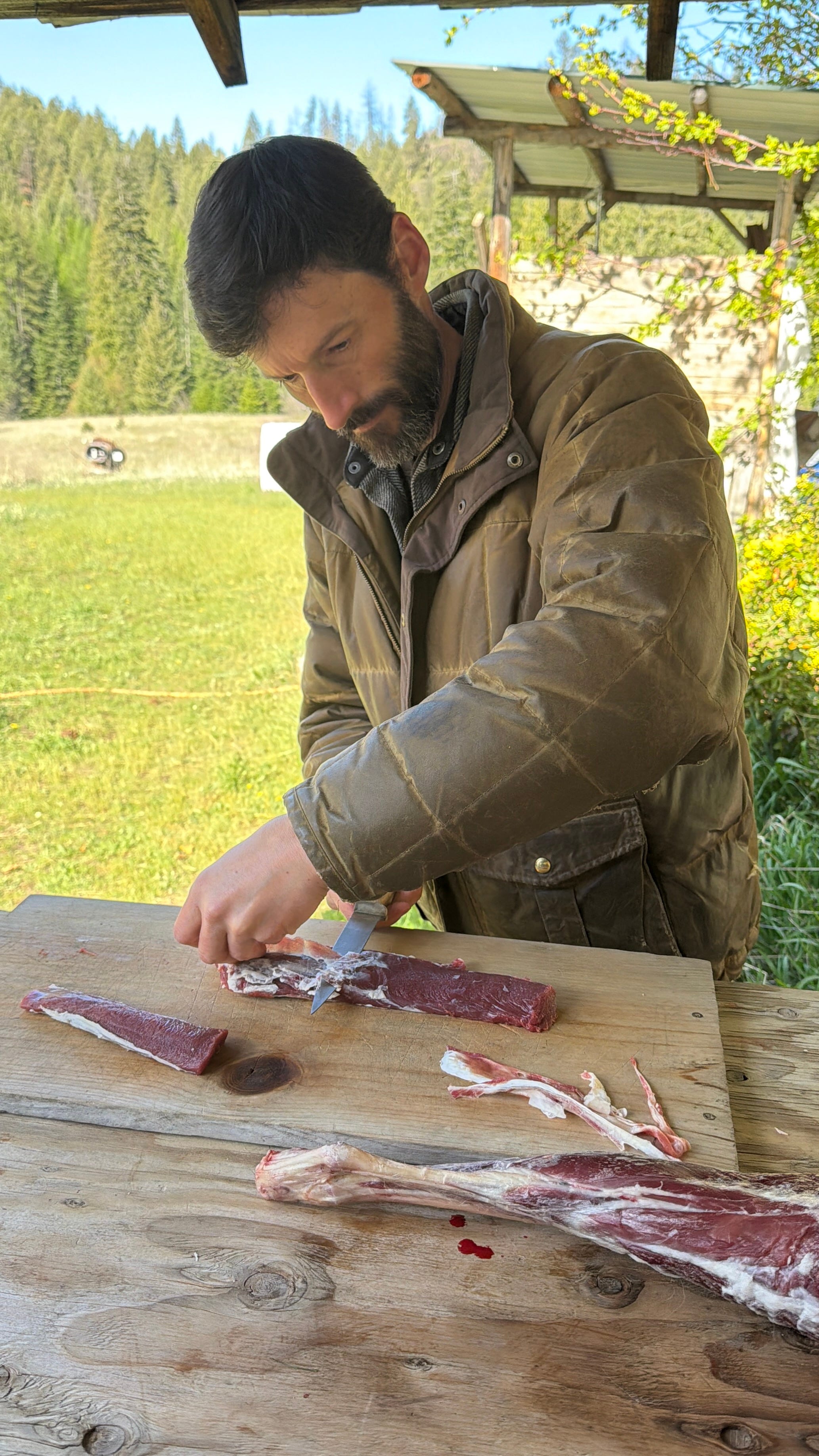
The weight of the meat and bones came in at just over 35lbs, not quite enough to feed 10 people for five days. Bruce made a comment that he would have to buy bigger goats next year. We butchered the goat and gave the fillets to the chef. I noticed that by the time we finished, I felt better— processing the animal somehow allowed me to process my own emotions and gave me a feeling of agency. Now I felt prepared to eat the meat.
On the final day of the course, the youngest student, a 15 year old boy shared that he had also felt bad when the goat was killed. He added that it was better to feel those emotions than to feel nothing, how we typically approach meat.
When Sarah McGlenn learned that her now-husband Bruce was a hunter, she thought she could never date him. But, curiosity got the best of her and she went on a second date. She was amazed by his compassion. Eventually, she learned that Bruce developed his deep compassion for all living beings not in spite of hunting but because of hunting.
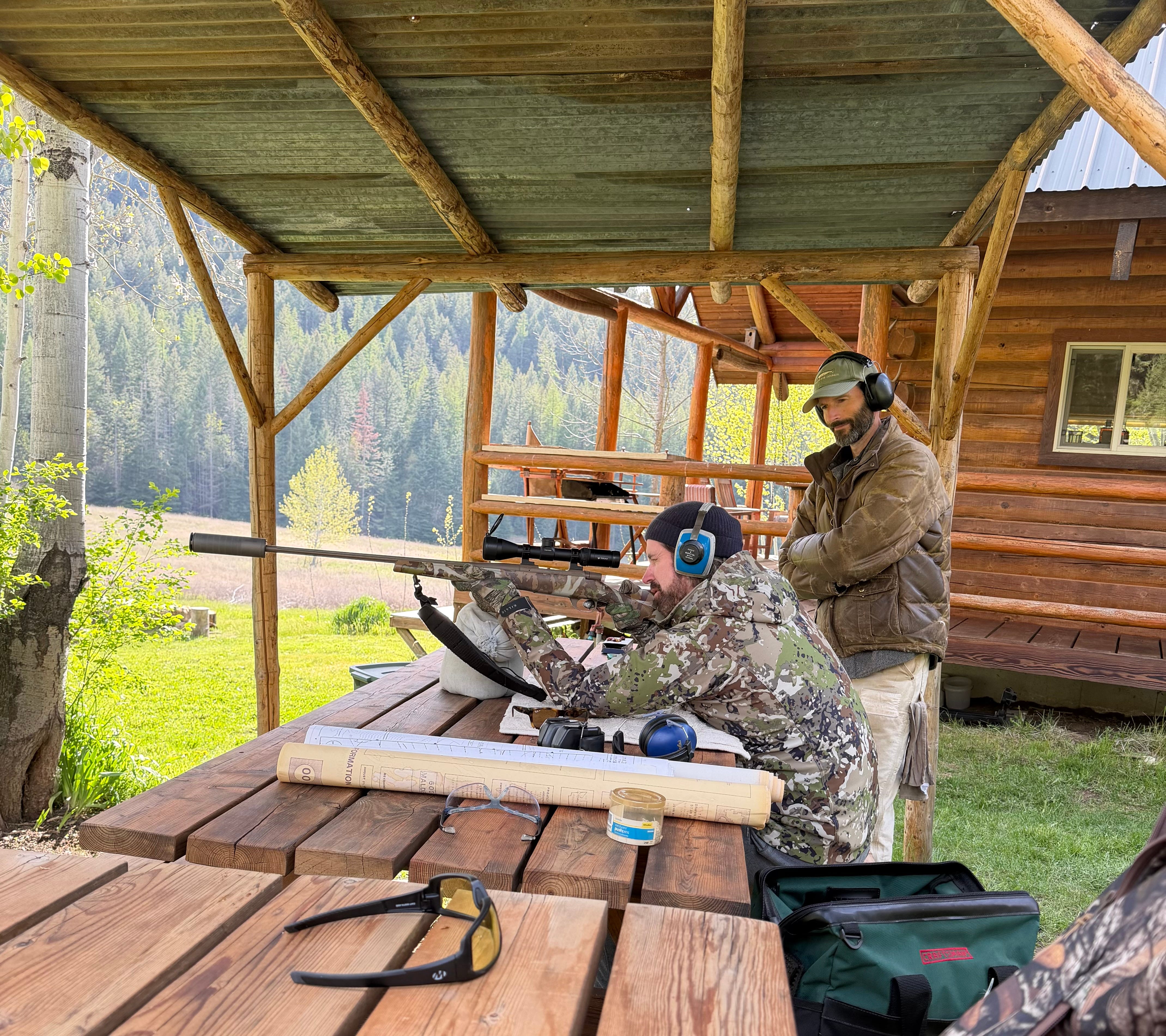
On the second day of the course, Bruce’s friend Kelly came to help teach ballistics. Kelly grew up in eastern Washington and his earliest memories are hunting. He ran through the woods behind his house for hours with a BB gun tracking and hunting any animal bold enough to cross his path. When he turned 10, his Dad bought him a shotgun, and Kelly hunted all year with that thing, eventually killing a deer. The following year, Kelly’s dad bought him a .30-06 Springfield rifle. The gun had such a big kick that he walked around with a bruise from his nipple to his neck all fall.
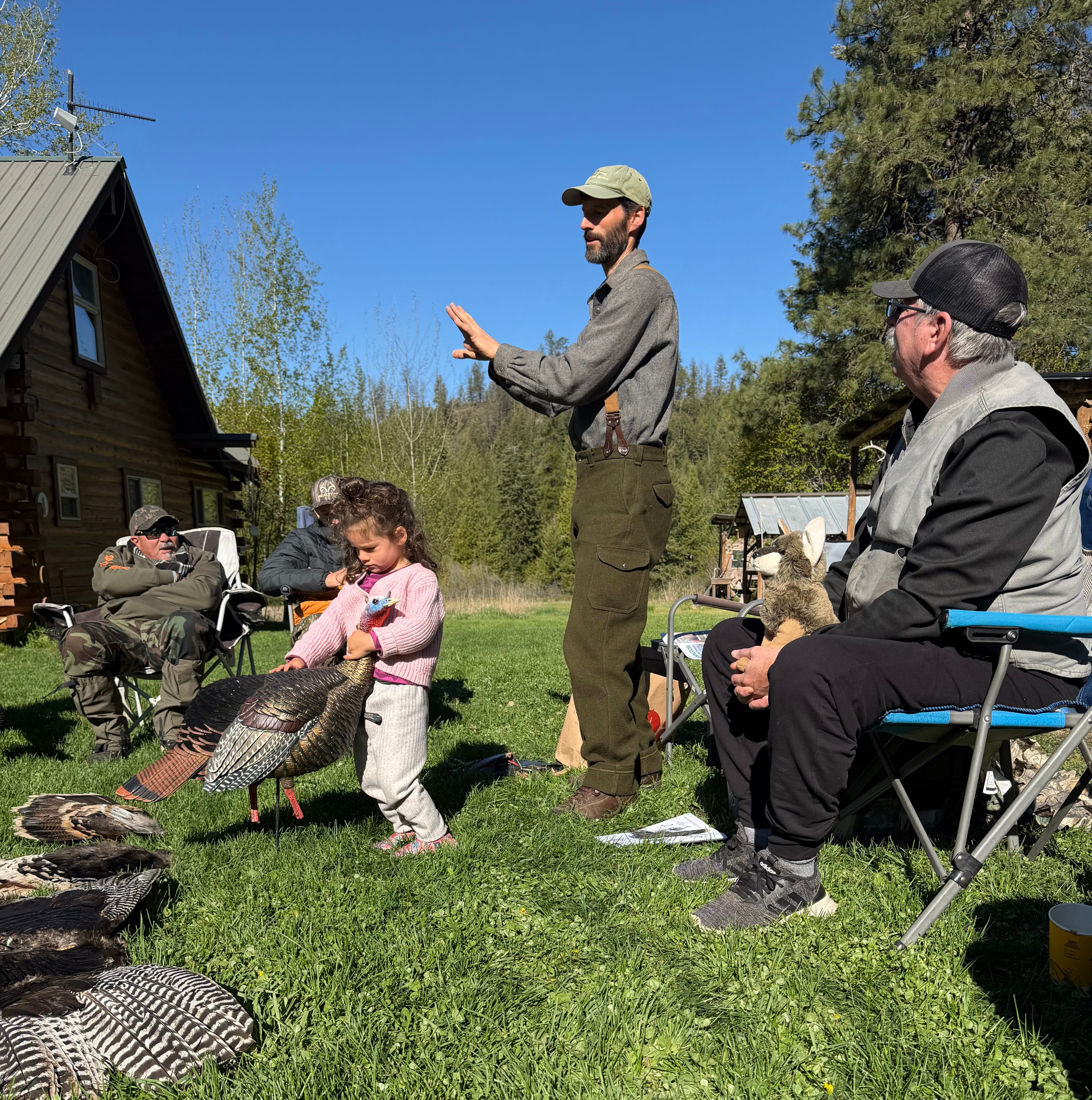
I asked how Kelly actually caught anything when he was that young. He told me he spent so much time in the woods that eventually it was only a matter of time until some animal made the mistake of crossing his path. Kelly became a bow hunter for his entire adult life. He described archery like throwing a baseball. There’s no sight and no way to guarantee you’re on target, but if you practice, eventually you’ll be able to hit the strike zone every time.
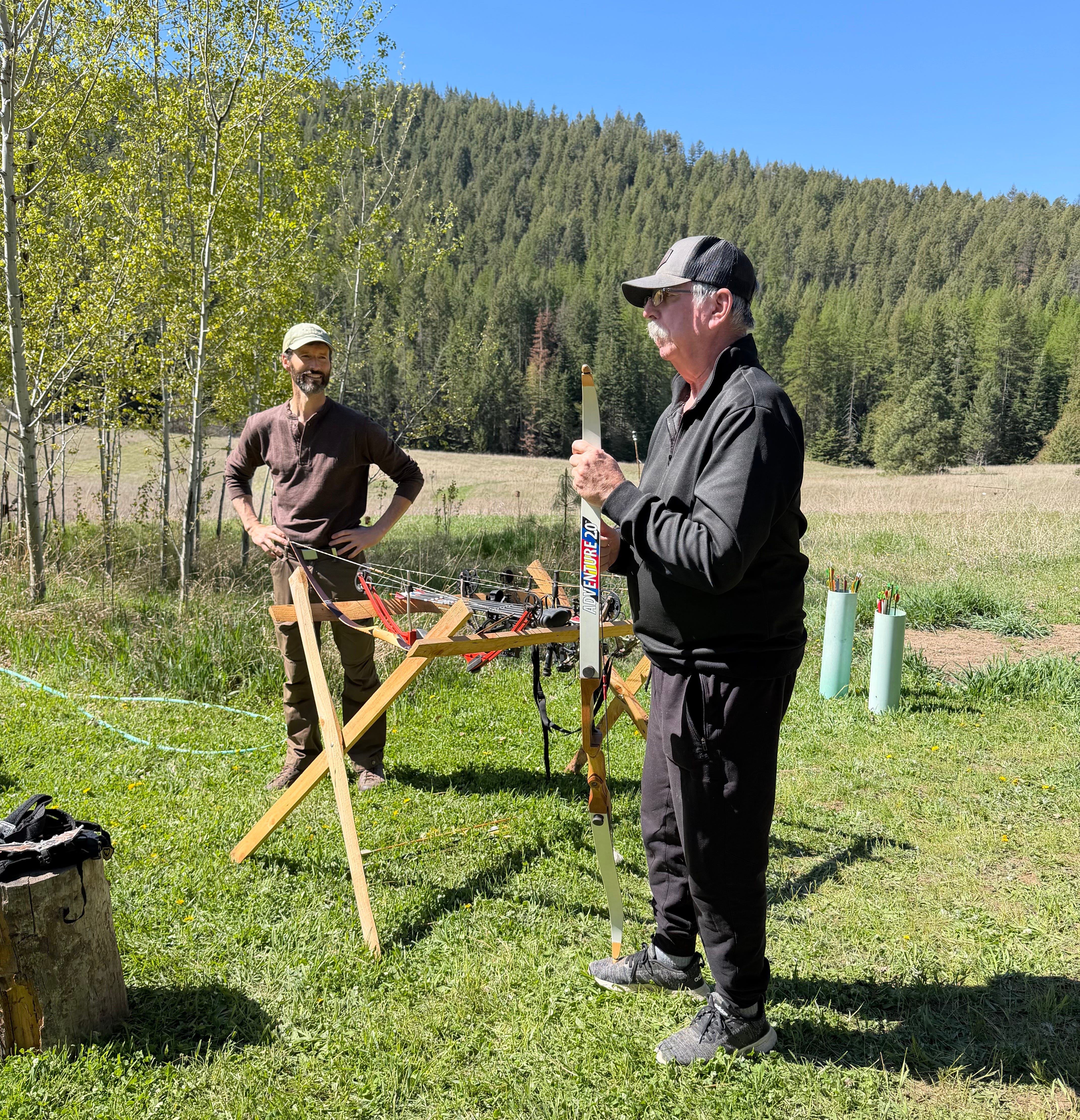
Kelly struck me as an enigma. He said things like, “I just love hunting. I’ll hunt anything I can from a ground squirrel to a grouse to a moose.” But then I learned that he would go on 30 day hunting trips each year and sometimes come back with nothing just as happy. On those hunting trips, Kelly could’ve used a rifle and raised his chances of killing something, but he stayed committed to the bow. I got the sense that when Kelly uses the word “hunt” he means something other than “kill”.
Killing only seems to happen on the rare occasion when everything lines up and an animal walks right through the path of Kelly’s arrow. But hunting encapsulates the whole process of connecting to the animals from finding tracks and scat, learning where they like to hang out, and watching them.
Bruce and Kelly’s sense of responsibility for passing on their love for hunting comes in large part from knowing that it’s on the decline. Hunting participation peaked in 1982, when nearly 17 million hunters purchased 28.3 million licenses.1 In 2022, only 14.8 million people purchased licenses.2 Bruce and Kelly attribute the decline to people getting lazier and also well-organized anti-hunting groups that are winning the public relations war. They are concerned for the conservation and wildlife population management that are funded by the sale of hunting licenses.
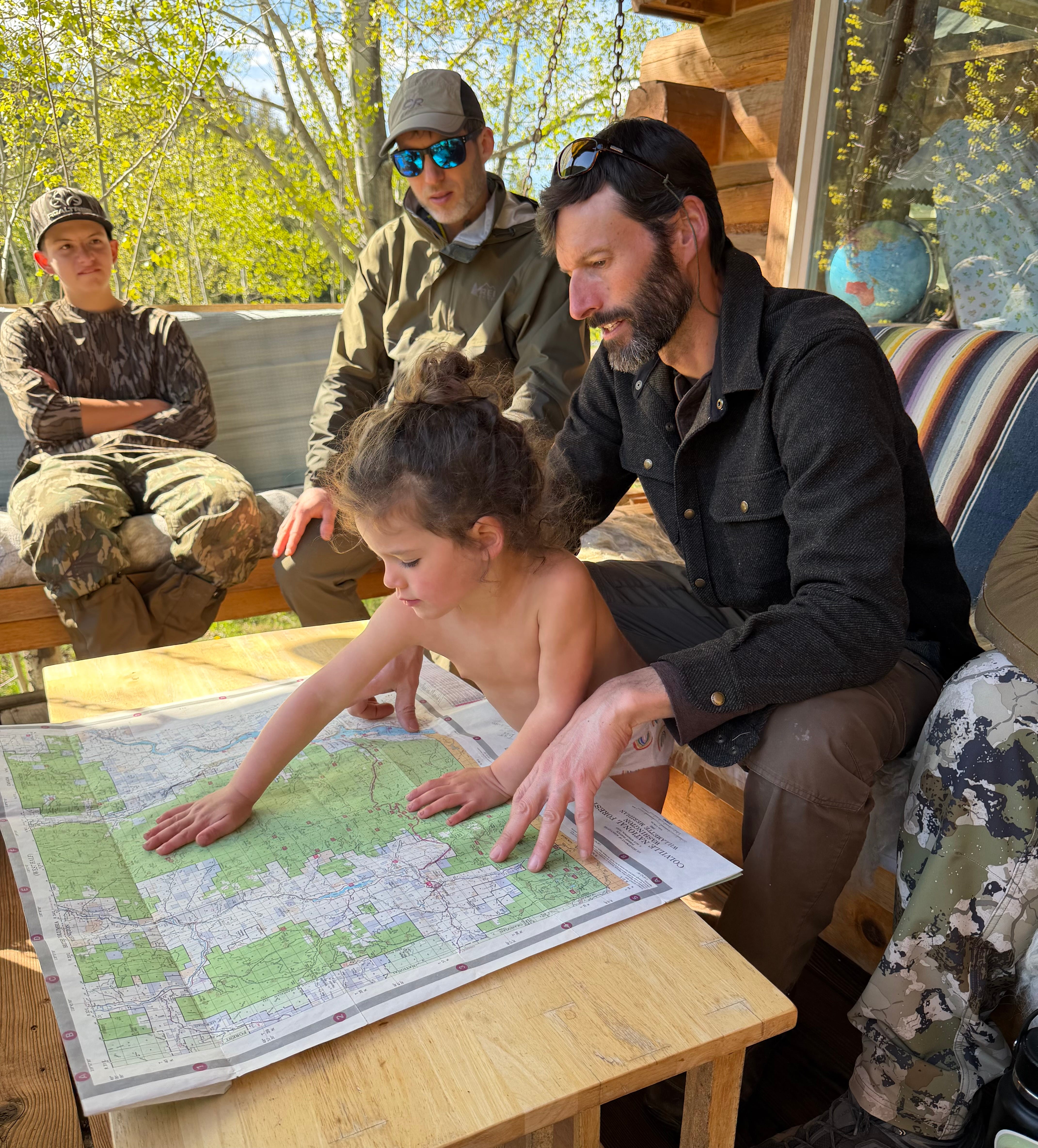
On the third day of our course, a tribal elder from the Colville Reservation named Jen spoke to us. She brought a slow-cooked crockpot of moose meat to share so tender it fell apart on the fork.
She spoke straight from the heart, no speech or presentation, and touched on everything from our profit-maximizing culture to getting run over by a drunk driver. She mentioned that the Colville Reservation has 1.3 million acres, and doesn’t do mineral extraction on any of it. They know there’s gold in the soil, but they don’t care. They would rather conserve the land for their grandchildren than rip into it.
All members of Jen’s tribe hunt. It’s a deep part of their culture, and they hire the very best scientists to manage their fish and wildlife populations sustainably.
After the talk, I asked Jen where the tribe gets money to hire the best scientists? She said they do logging on the reservation. I asked if they do clear cutting. She said they mostly do selective “thinning”. They carefully remove each tree without uprooting the surrounding trees and then transport the logs through the forest using zip lines. I asked what kind of company was willing to sacrifice profits to do that? I knew that Bruce hadn’t been able to find anyone willing to do selective cutting on his own land.
Jen told me that a tribal member started the company. He went to South Dakota and made it big fracking, then came back and started the logging company. I asked, “So he did mineral extraction?” She said, Yes— sometimes you have to do things you don’t believe in if they serve a greater dream. Now he employs many tribal members and they harvest trees sustainably on their own land.
I told Jen I’m planning on moving to New York City by the end of the year. She said, “That’s terrible. Why would you do that?” She gets congestion in her chest every time she visits the city (Spokane) and feels too hot on the black tar that traps heat. I wish everyone reacted that way. I told her that my family lives in New York, and I wanted to go back to them. There’s more money in New York and I think I’d have a better shot at making my biggest dreams come true if I go there. She said, “Well that’s great honey. Then I think you should go do that.”
On the final day, when I said good bye to Bruce and his family, Bruce told me about his family’s dream to spend more time on the road. “Maybe we’ll just have to come visit you in Manhattan,” he said. I told him about my idea for a backcountry hunting course this fall. We could take a group into the high alpine of Washington for a week of backpacking, fly fishing, mushroom foraging, and hunting. He said, “Sounds great. Wanna start it?” Yes.
https://www.outdoorlife.com/why-we-are-losing-hunters-and-how-to-fix-it/
https://www.fws.gov/sites/default/files/documents/Final_2022-National-Survey_101223-accessible-single-page.pdf